Frequently Asked Questions
As a general guideline:
- Hydraulic chainsaws:replace the sprocket approximately every 4 chains
- Gas chainsaws:replace the sprocket approximately every 2–3 chains
Replace the sprocket sooner if you notice:
- Hooked or worn teeth
- Excessive vibration or chain slipping
- Cracks or breaks on the drive links
Using a worn sprocket can damage the chain and create safety hazards. If you see cracks or breaks on the drive links, it usually means the sprocket should have been replaced at least one chain earlier.
Rebar sizes above #8 (25 mm) can be more difficult and may significantly reduce cutting efficiency.
⚠️ Important Warning:
Rebar or steel must always be surrounded by concrete or aggregate material. Cutting exposed steel without surrounding material can damage the chain and create a serious safety hazard.
As a general guideline, a diamond chain used on a gas-powered saw will typically cut 45–85 linear feet in 6-inch (15 cm) concrete. When used on a hydraulic saw, chain life is often approximately doubled due to smoother, more consistent power delivery.
stone. However, heavy rebar can shorten bar life.
A minimum water pressure of 20 PSI is required to properly cool the chain, flush debris from the cut, and ensure safe operation. Using insufficient water can cause the chain to overheat, break, and wear segments prematurely, making the cut more difficult and increasing the risk of equipment damage or injury.
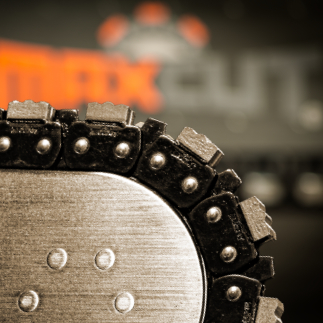
Diamond chains cut differently. They grind through concrete using small diamond segments, not hooked teeth. Because of this design, kickback is not an issue with diamond chains.
The preferred method for starting a cut is to plunge straight into the wall, which is safe and effective when using a diamond concrete cutting chain.
As a general guideline, gas-powered concrete cutting chainsaws can typically cut 1 linear foot at a depth of 6 inchesin approximately 2 minutes. Hydraulic saws are generally faster due to more consistent power and torque.
As a general rule, a correctly tensioned diamond chain should not be overly tight and should move freely around the guidebar by hand without binding. If the chain is too tight, it can cause excessive wear and reduce performance; if too loose, it may derail or cut inefficiently.
Using a diamond chain on a wood-cutting chainsaw can cause serious damage to the saw and create safety risks for the operator.