
Choose Your Chain Saw Type
Our Products
Ready To Get a Quick Quote?
Call or email us to get a quote or if you have any questions.
FAQs
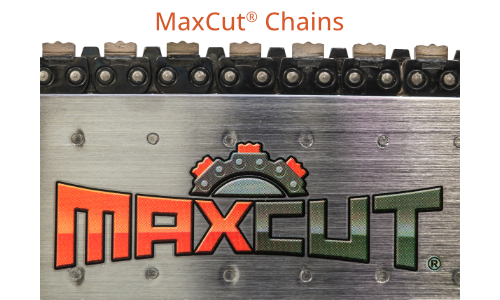
MaxCut chains are designed to be run in either direction.
The water flow rate is critical for flushing the slurry out of the components. Water also acts as a coolant for the entire system. If an inadequate water flow rate is used it may result in premature wearing of the drive links and rivets. This results in a phenomenon referred to as “chassis stretch”. The recommended water flow is 2.5 GPM (9.5 LPM) with a minimum pressure of 30 PSI (2.1 BAR).
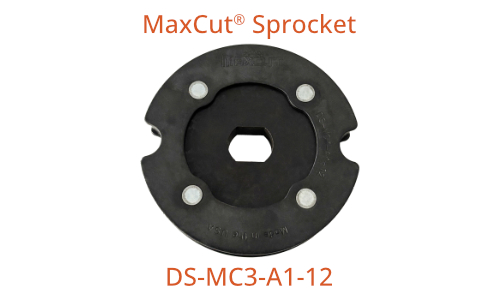
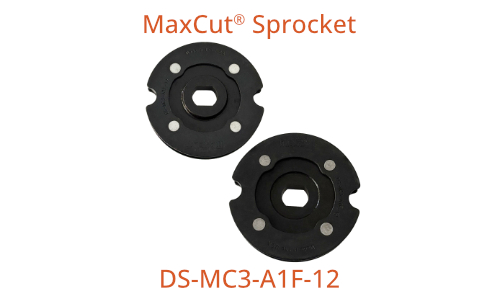
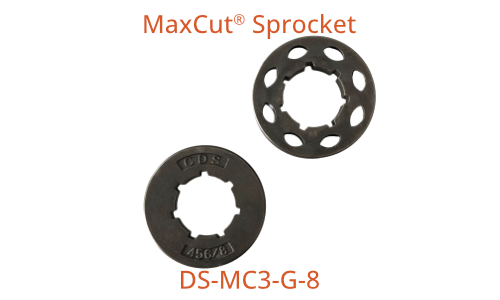
Yes it is normal to see grooves form in the teeth of the Drive Sprocket. This is caused by contact between the Drive Sprocket and the Drive Links on the chain. When the grooves exceed 1/32” which is approximately half way through the tooth, damage to the chain chassis may occur. MaxCut Drive Sprockets are designed to be flipped over to use the opposite side of the tooth which provides more use of the product. This is true for all of the sprockets except for flush cut sprockets. These are designed to be used on one side only.
Every time you replace the chain, you should inspect the sprocket.
As a general guideline:
- Hydraulic chainsaws:replace the sprocket approximately every 4 chains
- Gas chainsaws:replace the sprocket approximately every 2–3 chains
Replace the sprocket sooner if you notice:
- Hooked or worn teeth
- Excessive vibration or chain slipping
- Cracks or breaks on the drive links
Using a worn sprocket can damage the chain and create safety hazards. If you see cracks or breaks on the drive links, it usually means the sprocket should have been replaced at least one chain earlier.
Yes. Diamond chains can cut rebar sizes #4 or #5 (12–15 mm) without any issue.
Rebar sizes above #8 (25 mm) can be more difficult and may significantly reduce cutting efficiency.
Rebar sizes above #8 (25 mm) can be more difficult and may significantly reduce cutting efficiency.
⚠️ Important Warning:
Rebar or steel must always be surrounded by concrete or aggregate material. Cutting exposed steel without surrounding material can damage the chain and create a serious safety hazard.